

Trusted Care: transform health measurement points into trustworthy data infrastructure
In the digital healthcare era, value is not merely in blood pressure monitors, scales, or SpO₂ devices. Value lies in the ability to identify users, collect standardized metrics, synchronize data in real-time, and trigger the next care actions.
From health measurement kiosk to proactive care platform
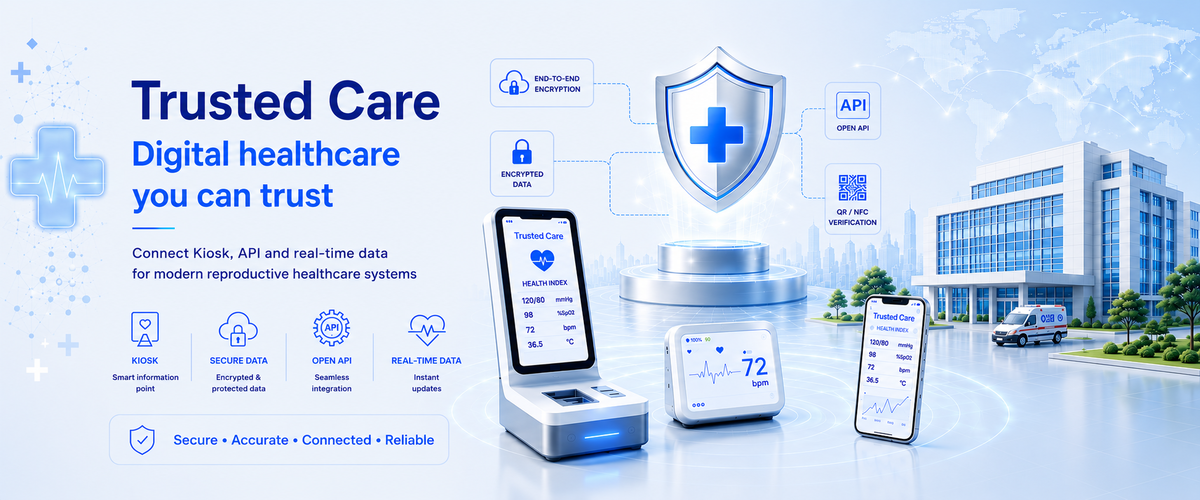
Trusted Care can be positioned as a “phygital healthcare infrastructure” layer: users interact at kiosks or measurement devices, the system authenticates/identifies measurement sessions, then data is standardized and distributed to partner systems via APIs and Webhooks.
This approach aligns with the trend of expanding care services beyond hospitals: pharmacies want health consultation based on data, clinics want to reduce check-in time, enterprises want to organize periodic screening, and insurance units need structured measurement data to design preventive programs.
Proposed market message
Trusted Care transforms everyday health checks into trustworthy digital journeys. The solution helps organizations deploy self-service health measurement points, connect data securely, and activate downstream care workflows: consultation, scheduling, monitoring, reminders, service package sales, or health reports.
Key technical features
Device portfolio can be deployed in multiple configurations: multi-metric kiosks for vital signs, automatic blood pressure monitors, bone density analysis devices, or outdoor kiosks integrated with identification, NFC/QR, and various specialized sensors.
Multi-metric Health Kiosk
Measures blood pressure, height, weight, BMI, SpO₂, and temperature; supports touchscreen, receipt printing, and optional ID/passport reading integration per configuration.
Multi-protocol connectivity
Devices use USB, RS232, RS485, TTL, LAN, WiFi, Bluetooth, or 4G depending on product line, enabling flexible integration with hospital systems, pharmacies, and Trusted Care backend.
Identification at measurement point
QR, barcode, NFC, ID card, smart card, facial recognition camera, and liveness detection create the foundation for linking measurement metrics with the correct user.
| Processing platform | Industrial J6412 2.0GHz mainboard, 256GB SSD, multiple USB/RS232 ports, dual TCP/IP network cards; suitable for edge gateway role at kiosk. |
|---|---|
| Display & interaction | 10.1-inch capacitive touchscreen, 1280×800 resolution; supports voice guidance, self-service workflows, and on-site result printing. |
| Health metric groups | Blood pressure, heart rate, height, weight, BMI, SpO₂, temperature, 3-channel ECG, body fat, and ultrasonic bone density depending on device. |
| Reference accuracy | SpO₂ in range 70–100% with ±2% error, weight up to 200–300kg per configuration, height error down to 0.1–0.2cm, infrared temperature error ±0.2°C per module. |
| Integrated peripherals | 58mm thermal printer, QR/barcode reader, NFC reader, ID/passport card reader, multi-channel speaker, dual camera, and 110/220V power supply. |
API priority: the connectivity layer that differentiates Trusted Care
Trusted Care’s strength is not locking data within the kiosk. API allows partners to retrieve device lists, fetch measurement data, create or track fulfillment requests, and register Webhooks to receive notifications when new metrics are generated.
User scans QR/NFC/ID or logs in via partner’s identity flow.
Kiosk/device collects metrics and validates measurement conditions.
Edge gateway normalizes measurement data by device, timestamp, and user profile.
Backend receives measurement data via API or Webhook.
Push consultation, reports, scheduling, orders, or alerts per scenario.
Devices Service
Allows partner systems to discover which devices the organization owns or manages, enabling permissions, monitoring, and configuration per deployment point.
Readings Service
Retrieves measurement metrics from devices, supporting personal health records, provider dashboards, or enterprise health reports.
Fulfillment & Webhooks
Fulfillment supports request creation and status tracking; Webhooks enable partner systems to be proactively notified when new measurement data arrives.
Operations experience: fast, self-service, scalable
With automated kiosks and devices, Trusted Care aims to reduce manual counter operations, improve measurement data consistency, and allow healthcare staff to focus on consultation. Automatic blood pressure monitors include result assessment mechanisms, print results immediately, support multiple peripheral interfaces, and can transmit data directly to hospital networks without requiring separate computers.
For screening or preventive care sites, ultrasonic bone density measurement devices add a specialized service layer: quick screening, portability, wired/WiFi/cellular network support, and suitability for diverse user groups such as elderly, pregnant women, children, and related specialties.
Market acceleration strategy
Rather than selling individual kiosks as standalone devices, Trusted Care should be packaged as a “digital health interaction platform” including devices, APIs, data, dashboards, and implementation guides per industry.
1. Pharmacy chains
- Deploy kiosks in stores for free or member-tier blood pressure, BMI, SpO₂, and temperature measurement.
- Create pharmacist consultation flow: alert abnormal metrics, suggest appropriate products, schedule remote doctor appointments.
- Integrate loyalty app via QR/NFC to increase store visit frequency.
2. Clinics & hospitals
- Self-service pre-visit screening: patients measure vital signs before seeing doctors.
- Push data to HIS/EMR via API, reducing manual entry.
- Triage patients based on initial metrics and appointment scheduling.
3. Enterprise & insurance
- Periodic health screening at offices, factories, or industrial parks.
- Anonymous health dashboard by group for wellness program design.
- Disease prevention packages, re-measurement reminders, and long-term metric tracking.
4. Government & community health
- Mobile health screening points at communes/villages, schools, senior centers.
- Registration, identification, and initial screening metric updates.
- Early detection of high-risk groups for referral or remote consultation.
Proposed commercialization roadmap
Phase 1 · Product completion
- Standardize SKUs: Lite, Pharmacy, Clinic, Enterprise.
- Build API sandbox demo and sample dashboard.
- Create 2-week deployment documentation for partners.
Phase 2 · Value validation
- Pilot 5–10 pharmacy/clinic points.
- Measure KPIs: measurement volume, identification rate, consultation rate, post-measurement revenue.
- Publish industry-specific case studies.
Phase 3 · Scale expansion
- SaaS + device rental + integration fee model.
- Sales channels via HIS/EMR partners, insurance, pharmacy chains.
- Add AI-based classification and risk scoring at support level, not replacing physicians.
Trusted Care can become the “digital gateway” for preventive healthcare
When combining self-service measurement devices, digital identification, APIs, and real-time data, Mobile-ID has the opportunity to elevate Trusted Care beyond kiosk scope: becoming a platform connecting citizens, pharmacies, clinics, insurance, and community care programs.
Next implementation suggestions: complete landing pages per industry, API demo suite, sales documentation package, pricing models, and pilot case studies.




Community Discussion